- All
- Product Name
- Product Keyword
- Product Model
- Product Summary
- Product Description
- Multi Field Search


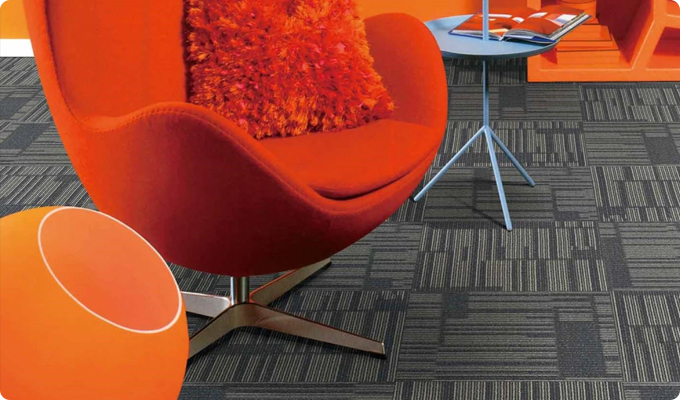
The production of carpet tiles mainly consists of two major equipment: the tufting machines and the backing machines. These two category of machines respectively correspond to the key processes of carpet surface production and carpet backing processing.
 |  |
Detailed Explanation of Tufting Machine Models and Their Purposes
The main models of tufting machines used to make carpet tiles production include:
1. M-color model tufting machine- Function: It focuses on individual yarn controlling, enabling the colorization and refined design of carpet surface patterns. It is suitable for square carpet tiles with high requirements for color richness (such as commercial carpets, artistic decorative carpets, etc.).
- Technical features: Equipped with an individual yarn supply system, it supports the simultaneous tufting of patterns and textures in multiple colors.
2. 6+6 model tufting machine
- Function: "6 + 6" usually refers to double needle bar tufting system, which is 1/6”G+ 1/6”G of each needle bar, which can improve the density and structural stability of the carpet surface. It is suitable for making thick and wear - resistant commercial or household carpets tiles.
- Application scenarios: Carpets for high - frequency use scenarios such as hotels and office buildings, which need to balance comfort and durability.
3. 8+4 model tufting machine
- Function: It adopts a double needle bar tufting systems. 1/8”G is one roller feeding yarn with one servo motor to control. 1/4” is individual yarn control system, which can not only ensure the basic strength of the carpet surface but also achieve fine processing of patterns.
- Technical advantages: It balances production efficiency and pattern complexity and is suitable for carpet tiles production.
4. Plain cut or plain loop model tufting machine
- These two models are the basic and classic model to make carpet tiles. With gauge 1/10”G or 1/8”G, make low pile height to make solid color or simple stripe pattern carpet tiles.
Carpet tiles Backing Options
- Carpet tiles backing has three options with different materials. Different materials correspond to different performances and application:
1. PVC back coating line
Advantages and Disadvantages of PVC Carpet Backing
Basic Characteristics
PVC (Polyvinyl Chloride) carpet backing is typically made by mixing polyvinyl chloride resin with plasticizers, stabilizers, etc. It is commonly used in woven carpets and carpet tiles, providing structural support and anti-slip functions.
Advantages
• Strong Durability:
• Excellent abrasion and tear resistance, suitable for high-traffic areas (e.g., commercial spaces, corridors).
• Outstanding waterproof and moisture-proof properties, blocking ground moisture to protect the carpet surface.
• Superior Anti-Slip Performance:
• High friction when contacting the ground, reducing the risk of carpet displacement, especially suitable for smooth floors.
• Low Cost:
• Affordable raw materials and mature production processes make it suitable for mass production with limited budgets.
• Good Dimensional Stability:
• Less prone to shrinkage or expansion due to temperature and humidity changes, keeping the carpet flat.
Disadvantages
• Inadequate Environmental Friendliness:
• May contain phthalate plasticizers, posing risks of VOC (Volatile Organic Compounds) emission, failing to meet high-end environmental certifications (e.g., GREENGUARD).
• Difficult to degrade after disposal, releasing toxic gases when incinerated.
• Poor Comfort:
• Hard texture leads to a stiff foot feel, with lower comfort for long-term walking compared to elastic backing materials.
• Low-Temperature Brittleness:
• Prone to hardening and cracking at temperatures below 0°C, unsuitable for extremely cold regions or low-temperature environments.
• Poor Air Permeability:
• Non-breathable, prone to mold growth at the carpet bottom if the ground is damp.
2. Bitumen back coating line
Advantages and Disadvantages of BITUMEN Asphalt Carpet Backing
Basic Characteristics
BITUMEN asphalt backing is made by compounding asphalt with fibers (e.g., jute, polyester), commonly used in traditional tufted carpets or anti-slip carpets, leveraging asphalt's viscosity to enhance grip.
Advantages
• Strong Anti-Slip and Adhesion:
• The viscosity of asphalt closely adheres to the ground, effectively preventing carpet sliding, suitable for easily displaced scenarios like stairs and ramps.
• Extremely Low Cost:
• Inexpensive asphalt raw materials and simple production processes make it one of the lowest-cost backing materials.
• Rapid Shaping:
• Cooled asphalt fixes carpet fibers, preventing fraying or loosening, suitable for initial shaping of low-cost carpets.
Disadvantages
• Environmental and Health Risks:
• Releases pungent asphalt fumes at high temperatures, containing carcinogens like benzopyrene, non-compliant with indoor environmental standards, only suitable for outdoor or well-ventilated areas.
• Poor Weather Resistance:
• Prone to softening and sticking to the ground at high temperatures, and brittle at low temperatures, with a narrow applicable temperature range (-5°C to +50°C).
• Heavy Weight and Easy Aging:
• High-density asphalt backing increases carpet weight; long-term use leads to oxidation, hardening, and loss of elasticity.
• Difficult Maintenance:
• Hard to clean if stained or melted, and repairing easily damages the carpet structure.
3. TPO back coating line
Advantages and Disadvantages of TPO Carpet Backing
Basic Characteristics
TPO (Thermoplastic Olefin) carpet backing is made of olefin polymers, often compounded with non-woven fabrics and mesh fabrics, used in high-end commercial carpets or eco-friendly carpets.
Advantages
• Excellent Environmental Performance:
• Free of halogens and plasticizers, with extremely low VOC emissions, compliant with environmental certifications like LEED and GREENGUARD GOLD, suitable for sensitive indoor environments (e.g., hospitals, schools).
• Strong Weather and Aging Resistance:
• Can be used in environments from -40°C to +100°C, with strong resistance to UV and ozone, unlikely to harden or crack after long-term use.
• Good Flexibility and Resilience:
• Soft texture and comfortable foot feel, combined with good anti-fatigue properties, suitable for home use or places requiring comfort.
• Recyclable and Lightweight:
• Recyclable materials with low density, over 30% lighter than PVC backing, reducing transportation and installation costs.
Disadvantages
• Higher Cost:
• High raw material and production process costs, about 2-3 times the price of PVC backing, limiting its application in low-cost carpets.
• Process-Dependent Adhesion:
• Bonding with the carpet surface requires hot-melting or special adhesives, with high requirements for production processes; otherwise, delamination is prone to occur.
• Moderate Solvent Resistance:
• Contact with strong solvents (e.g., acetone, toluene) may cause swelling, unsuitable for special environments like chemical workshops.
Summary of Comparisons and Application Scenarios
Material | Core Advantages | Core Disadvantages | Application Scenarios |
PVC | Durable, anti-slip, low cost | Poor environmental friendliness, stiff foot feel | Shopping malls, hotel corridors, temporary outdoor carpets |
BITUMEN | Strong anti-slip and adhesion, extremely low cost | Hazardous substance release, poor weather resistance | Temporary outdoor carpets, low-requirement warehouse carpets |
TPO | Environmentally friendly, good weather resistance, comfortable foot feel | High cost, high process requirements | High-end office buildings, hospitals, family living rooms (environmentally sensitive scenarios) |
Extended Suggestions:
• For emphasis on environmental protection and long-term use, prioritize TPO backing, especially suitable for health-sensitive spaces like children's rooms and elderly rooms.
• In high-traffic commercial areas, balance the cost-effectiveness and durability of PVC, but pay attention to environmental certifications.
• Asphalt backing is gradually phased out due to health risks, only recommended for short-term outdoor or low-environmental requirement scenarios.
4. POE Carpet Tile Backing
Material Properties
• Excellent Elasticity: POE (polyolefin elastomer) is a thermoplastic elastomer copolymerized from ethylene and octene, featuring good elasticity and flexibility. It ensures carpet tiles have a comfortable foot feel and are not prone to deformation after long-term use.
• Outstanding Stability: It provides excellent dimensional stability for fibers. Under different environmental conditions such as high temperature/humidity or cold/dryness, carpet tiles show minimal size changes, reducing issues like arching or shrinkage.
• Strong Adhesion: POE can firmly bond with fibers, enhancing the structural strength and durability of carpet products. This prevents problems such as thread shedding or fuzzing during use.
• Superior Environmental Performance: For example, Dow's ENGAGE™ REN POE products are produced using biological residues and waste, with lower carbon emissions. Certified by ISCC PLUS, they offer a viable alternative to virgin petrochemical products, meeting market demands for eco-friendly carpets.
Application Advantages
• Improved Carpet Quality: POE backing ensures better flatness of carpet tiles, reducing curling. Its provided flexural stiffness helps maintain the carpet's shape, enhancing both appearance and performance.
• Versatile Application: Due to its excellent properties, it is suitable for various 场所 (settings), including homes, offices, schools, airports, and other high-traffic facilities, maintaining appearance and function over long-term use.
• Alignment with Sustainable Development: For consumers and enterprises pursuing environmental protection and sustainability, POE-backed carpet tiles are ideal choices, aiding in achieving green building and environmental certification goals.
5. FPE Carpet Tile Backing
Material Composition
It typically combines PE (polyethylene) and polyester non-woven fabric, or consists of thermoplastic elastomer composites. For instance, it may adopt a structure with two layers of thermoplastic composite elastomer hot-melt adhesive, a glass fiber cloth interlayer, and a soot-colored base fabric as the outer layer.
Performance Characteristics
• Eco-Friendly & Odorless: The backing adhesive primarily uses thermoplastic elastomer composites without liquid plasticizers, solving the odor problems of traditional PVC and PU carpet tiles for a healthier and greener option.
• Lightweight: The total weight per square meter of TPE and FPE carpet tiles is one-third lighter than that of the same type of PVC carpets and other rigid flooring materials, improving the safety of floor load-bearing.
• High Production Efficiency: As a thermoplastic composite elastomer hot-melt adhesive, FPE adhesive can bond the base fabric and tufted carpet by heating through an extruder. After compounding and compaction, it only needs cooling, with a relatively simple production process that significantly enhances efficiency.
• Lower Cost: The adhesive amount of soft-base FPE backing is generally 1.5 kg/m², which is 50%-60% less than that of PVC carpet tiles and 15%-18% less than TPE carpet tiles. Reduced raw material usage thus lowers costs.
• Multiple Functions: It has certain water, oil, and dust resistance, as well as a degree of self-cleaning function. Meanwhile, the bottom polyester soot-colored base fabric features good water, heat, and chemical corrosion resistance, with high elasticity and no creases on the carpet back, extending the carpet's service life.
 |  |
