- All
- Product Name
- Product Keyword
- Product Model
- Product Summary
- Product Description
- Multi Field Search


Views: 118 Author: Site Editor Publish Time: 2026-03-21 Origin: Site


If you have ever stared at a snagged sweater or a bald patch in a hand-tufted rug, you know the frustration of textile damage. Traditional needle-and-thread methods take hours and often leave visible scars. This is why many crafters and textile technicians are asking: Is a loop mending gun worth it? This tool promises to bridge the gap between slow manual labor and industrial efficiency.
In this deep dive, we evaluate the loop mending gun as a specialized solution for knit and carpet repair. Whether you are looking for a tool for rugs or a way to save high-end knitwear, this guide helps you decide if this investment belongs in your toolkit.
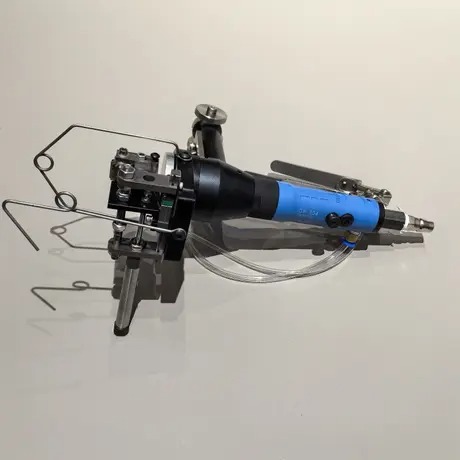
A loop mending gun is a motorized device designed to re-insert yarn loops into a backing material or a knit structure. It mimics the action of a tufting gun but on a much smaller, more precise scale. Unlike manual latch hooks, it uses a High speed needle mechanism to punch yarn through the fabric, creating a consistent loop height instantly.
The core of the device is an Automatic reciprocating needle. When you pull the trigger, the needle carries the yarn through the surface. It then retracts while a foot-presser holds the yarn in place, forming a loop. Because it is Portable, you can move it across large surfaces like area rugs without needing to dismantle the piece. For those doing frequent work for carpet repair, this mechanical assist is a massive physical relief for the hands and wrists.
While large factories use stationary machines, the Portable mending gun is the standard for onsite repairs. It is light enough to hold with one hand but powerful enough to penetrate heavy secondary backings. This balance of power and weight is what makes it a favorite for Professional restorers.
The most compelling reason to buy a loop mending gun is the sheer amount of time it saves. Manual mending is a meditative but glacial process. If you are running a business or repairing a large area, time is your most expensive resource.
Repairing a three-inch square bald spot on a rug manually could take an hour of careful latch-hooking. An Automatic mending gun can finish that same area in under five minutes. The High speed motor allows you to "fill in" missing sections with a density that is nearly impossible to match by hand. This efficiency is why the tool is considered essential for rugs that have suffered moth damage or pet scratches.
Humans get tired. When we get tired, our tension varies. A loop mending gun provides a mechanical consistency that ensures every loop is the exact same height. This means the repaired section blends seamlessly with the original pile. In Professional repair, "invisibility" is the goal, and mechanical precision helps achieve that faster than human fingers ever could.
A common question is whether a single loop mending gun can handle different yarn weights. The answer lies in the needle gauge and the adjustable settings of the tool.
When used for rugs, the gun must handle thicker wool or acrylic yarns. A Professional mending gun usually has an adjustable loop height, allowing you to match a low-pile office carpet or a thick shag rug. It is particularly effective for carpet repair where the primary backing is still intact but the face fiber has been pulled out.
For fine knits, a standard carpet mending gun might be too aggressive. However, for chunky knits or heavy cardigans, a Portable mending gun with a fine-gauge needle can be a lifesaver. It allows you to "re-loop" snags that have been cut or torn. You must be careful to stabilize the area first, but the results are significantly more Durable than simple darning.
| Textile Type | Yarn Weight | Recommended Gun Setting | Repair Strategy |
| Area Rug | Heavy Wool | High Speed / Long Loop | Fill density to match pile |
| Wall Carpet | Synthetic Blend | Medium Speed / Short Loop | Focus on backing adhesion |
| Chunky Knit | Bulky Acrylic | Low Speed / Manual Pulse | Follow the stitch direction |
| Tapestry | Fine Cotton | Specialized Fine Needle | Precision placement only |
Despite being an Automatic tool, the loop mending gun is not a "plug and play" device for beginners. It requires a certain level of "feel" to ensure the loops stay in place and the tension remains correct.
One of the first things users notice is that the gun "walks." Because the needle moves at High speed, the tool wants to move in a specific direction. You have to learn to guide it rather than fight it. For Professional results, you should always mend in the direction of the original weave or tuft lines.
Like a sewing machine, proper threading is vital. If the yarn is too thick for the needle eye, the motor will strain. Most Portable units come with a wire threader. Learning how to clear a jam without damaging the needle is the most important skill for anyone starting in carpet repair. If you force the gun when it's stuck, you risk bending the foot-presser, which is hard to replace.
A repair is only "worth it" if it lasts. A loop mending gun creates a repair that is often stronger than the original surrounding area, provided you use the right finishing techniques.
Because the gun punches yarn through the backing, the loops are held by friction. For rugs, you must apply a latex or textile glue to the back of the repair area to lock the loops in. Without this, a single pull could unravel your entire High speed repair. Once glued, the repair becomes permanent and washable (depending on the yarn used).
In knitwear, the mending gun doesn't just add decoration; it can actually reinforce a thinning elbow or heel. By adding extra loops of yarn into the existing structure, you create a reinforced "patch" that is integrated into the garment. This is far more Professional than sewing a separate piece of fabric over a hole, as it maintains the elasticity of the knit.
Is the loop mending gun worth the $100–$300 price tag? The answer depends on your volume of work and the value of the items you are fixing.
If you have one rug with a small snag, the gun is probably overkill. However, if you enjoy "upcycling" thrifted knits or making your own textile art, the gun pays for itself by saving you dozens of hours. It turns a chore into a High speed creative process.
For a rug cleaning or restoration business, the loop mending gun is a high-ROI (Return on Investment) tool.
Labor Costs: You can charge $50–$100 for a repair that takes you 10 minutes.
Service Range: You can offer specialized carpet repair services that competitors using only manual tools cannot match.
Client Satisfaction: The Professional finish achieved by the gun ensures repeat business and high-end referrals.
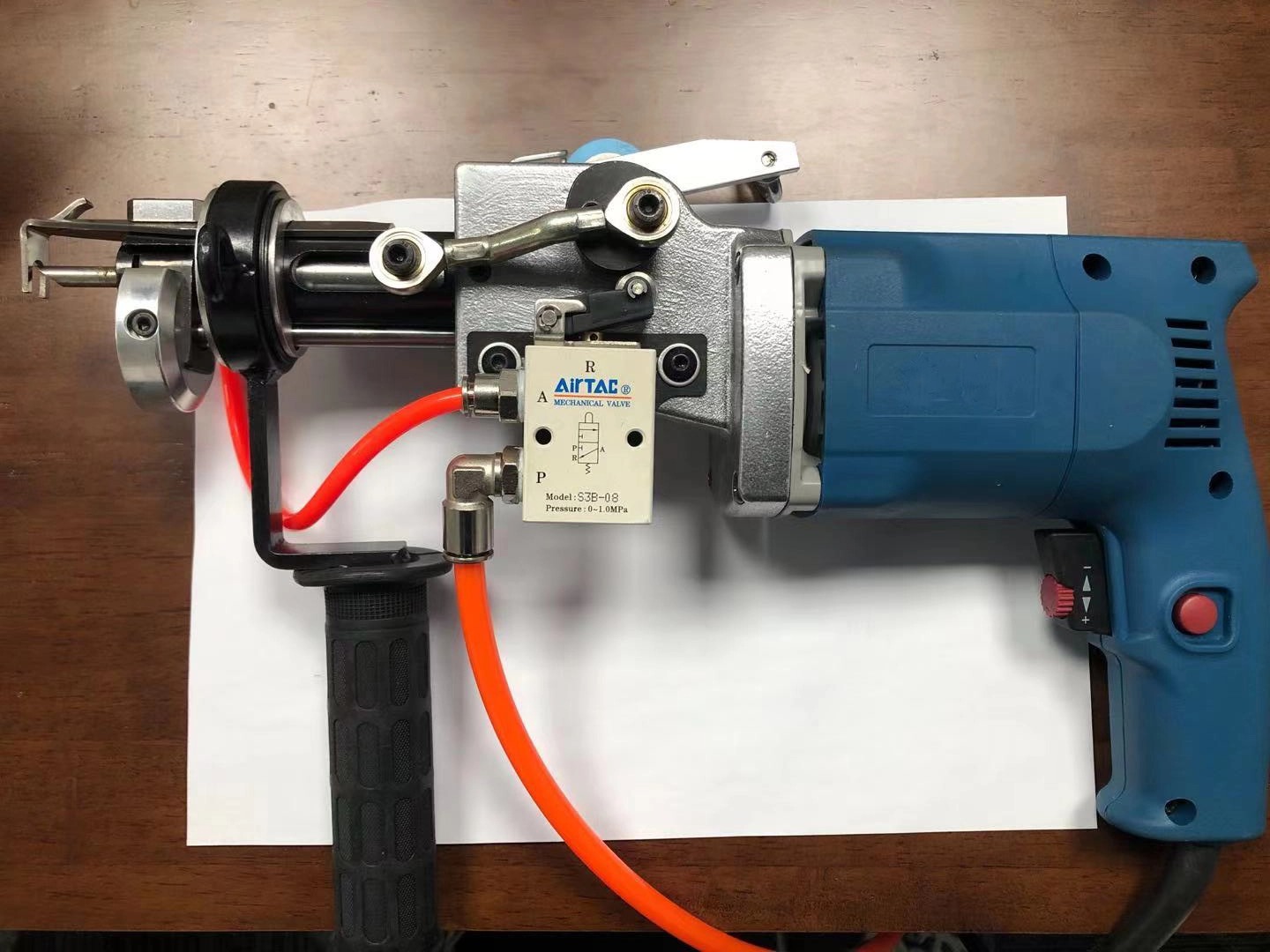
To get the most out of your loop mending gun, you need a few supporting tools. A gun alone is rarely enough for a complete restoration.
Yarn Carving Shears: After mending, the new loops might be slightly taller than the old ones. Use shears to level the pile.
Textile Adhesive: Essential for locking loops in for rugs.
Backing Fabric: If the hole is large, you may need to patch the primary backing before using the Automatic gun.
Tweezers: For pulling yarn through or adjusting the "bloom" of the yarn once the mend is finished.
Using these tools in tandem with a Portable mending gun ensures your work looks like it came straight from the factory.
Since these are High speed mechanical tools, they require regular "TLC" (Tender Loving Care) to prevent the motor from burning out.
The reciprocating needle generates a lot of friction. You must apply a drop of sewing machine oil to the main shafts every few hours of use. This keeps the action Automatic and smooth. A dry gun will start to "stutter," which can tear the backing fabric you are trying to fix.
Inspect the needle tip regularly. In carpet repair, you might hit a hard floor or a staple, which can dull or burr the needle. A dull needle won't penetrate cleanly; it will push the fabric away, leading to dropped loops. Replacing the needle is a cheap way to ensure your tool stays Professional grade.
So, is a loop mending gun worth it? If you value your time and demand a Professional level of consistency in your textile repairs, the answer is a resounding yes. While it has a learning curve, the ability to perform High speed repairs for rugs and heavy knits makes it a transformative tool. It turns an arduous manual task into an efficient, Automatic process that preserves the beauty and longevity of your favorite textiles.
Q1: Can a loop mending gun be used on delicate silk rugs?
Generally, no. The needle is usually too thick for high-density silk weaves. It is best used for wool, acrylic, and cotton textiles with a more open backing.
Q2: Does the gun cut the yarn automatically?
Most loop mending guns do not have a cutting mechanism (unlike cut-pile guns). You will need to manually snip the yarn once you finish a section of carpet repair.
Q3: Is it safe for a beginner to use?
Yes, but you should practice on scrap fabric first. The High speed needle is sharp and moves quickly, so keep your fingers away from the foot-presser while the power is on.
We understand the precision required for high-end textile machinery because we live and breathe it every day. Our company operates a world-class manufacturing facility that specializes in the research, development, and production of advanced textile components and carpet machinery. We aren't just a supplier; we are a technological leader in the field of tufting and mending equipment. Our factory is equipped with high-precision CNC centers and automated testing lines to ensure that every tool we produce—from large-scale industrial machines to Portable mending solutions—meets the highest standards of durability and performance.
Our strength lies in our deep integration of the supply chain and our commitment to B2B excellence. We know that in the competitive world of textile production and Professional repair, reliability is everything. That is why we focus on "quality first," providing our global partners with High speed tools that are built to last. When you choose our equipment, you are benefiting from decades of engineering expertise and a factory-direct relationship that ensures you have the best support in the industry.