- All
- Product Name
- Product Keyword
- Product Model
- Product Summary
- Product Description
- Multi Field Search


Views: 0 Author: Site Editor Publish Time: 2026-07-07 Origin: Site


Choosing the correct manufacturing equipment defines your factory’s future. It impacts daily output, final product quality, and your market position. Plant managers face a tough decision today. You must balance material stability against high energy demands. You also need to navigate strict environmental rules. Selecting a backing system requires deep technical insight. Both materials behave differently under heat and tension.
This article compares both setups clearly. We break down the technical architecture and commercial realities of each. You will learn how each configuration aligns with your production goals. We outline the compliance requirements you must meet. Our goal is to help you evaluate these options objectively. Your chosen machinery dictates facility layouts and power consumption for decades. Understanding these operational variables helps you make a highly informed capital expenditure decision.
Material Application: PVC back coating requires precise curing ovens and tension control, while bitumen back coating relies heavily on advanced cooling sections and temperature management to prevent material degradation.
Cost vs. Compliance: Bitumen generally offers lower raw material costs and an easier path to recyclability, whereas PVC provides unmatched dimensional stability but faces growing regulatory scrutiny regarding VOC emissions.
Equipment Footprint: A bitumen carpet tile backing machine typically requires a larger physical footprint due to extended cooling zones, impacting facility layout planning.
The heating methodologies for these two materials sit at opposite ends of the spectrum. PVC production utilizes plastisol. This liquid compound requires high-temperature curing ovens to fuse properly. Ovens must maintain strict profiles between 160°C and 180°C. The PVC resin absorbs the plasticizer under this intense heat. It transitions from a liquid state into a solid, durable gel. Temperature stability is non-negotiable. Even a slight drop prevents complete fusion.
Bitumen architecture demands a completely different approach. Manufacturers must melt the raw solid material before application. They pump the molten bitumen onto the carpet substrate. Once applied, the line shifts immediately to heat removal. A bitumen setup relies on intensive, multi-stage cooling mechanisms. Fans and chilled water rollers pull heat away rapidly. If you fail to remove this heat, the tiles will not set before the cutting phase.
Application hardware dictates product consistency. A typical PVC back coating setup uses doctor blades or extrusion dies. A doctor blade scrapes the liquid plastisol to a precise micron thickness. Extrusion pushes the material through a controlled lip. Both methods deliver exceptional uniformity across the web width.
Bitumen behaves more like a heavy, sticky paste. You apply it using heated application rollers. A lick roller picks up molten bitumen from a heated pan. It transfers this layer onto the back of the tufted primary. Operators then use lamination techniques. They press a fiberglass fleece into the hot bitumen. This adds necessary dimensional stability.
Carpet webs stretch and distort under heat. Controlling this tension prevents defects. We look at three main phases of web control:
Unwind Isolation: Load cells measure tension as the primary carpet unrolls.
Coating Zone Stabilization: Dancer rollers maintain steady pressure during material application.
Curing/Cooling Delivery: Drive motors adjust speed to handle changing material weights.
PVC remains relatively light until it exits the curing oven. However, the high oven heat causes the primary backing to shrink or stretch. You must isolate tension zones carefully. Bitumen presents a weight problem instantly. Molten bitumen is dense. The heavy, wet web sags. A bitumen line requires robust support rollers spaced tightly together.
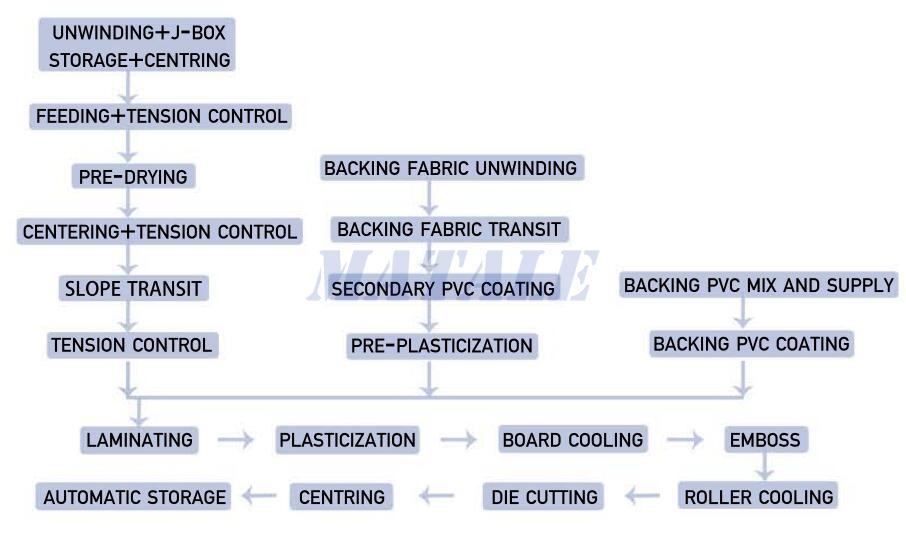
PVC sets the industry benchmark for dimensional stability. Tiles maintain their exact shape for decades. They resist curling at the edges, even under heavy foot traffic. Edge ravel resistance is another major benefit. The fused plastisol locks yarn tufts permanently in place. Furthermore, PVC offers excellent acoustic properties. It deadens sound effectively in large open office environments.
Operating a PVC line demands specialized infrastructure. Plasticizer off-gassing occurs inside the hot curing ovens. You must install advanced ventilation and exhaust treatment systems. Electrostatic scrubbers capture these chemical vapors before they reach the atmosphere. Inside the machine, precision is critical. You must control the curing zone perfectly. Under-curing leaves the tile brittle and prone to cracking. Over-curing scorches the backing and destroys flexibility.
Market preferences are shifting rapidly. Green building frameworks like LEED and GreenSpec penalize PVC usage. Architects actively seek alternative materials for sustainable projects. This pushback creates commercial risk. You may need to pivot toward non-phthalate plasticizers to stay competitive. Changing your chemical formulation directly alters your machine processing parameters. Operators must recalibrate oven speeds and temperatures to accommodate new eco-friendly recipes.
Bitumen tiles are incredibly heavy. This weight provides excellent lay-flat characteristics. Installers love them because they rarely shift after placement. The material creates a natural moisture barrier. This makes them ideal for ground-floor concrete slabs. They perform exceptionally well in high-traffic commercial settings like airports and hotel corridors.
Handling molten material is your biggest operational challenge. You need heated storage tanks to keep the raw material liquid. Facility piping must be jacketed and heated. Continuous circulation prevents premature solidification. If bitumen freezes inside a pipe, you face days of downtime.
The cooling accumulator is the heart of a bitumen back coating machine. This massive vertical tower loops the carpet up and down. It forces ambient and chilled air across the web. The tiles must be completely set before reaching the die-cutting station. A warm core will gum up cutting blades instantly.
Cost efficiency drives bitumen popularity. Baseline raw material costs remain significantly lower than PVC. Additionally, bitumen aligns well with closed-loop recycling programs. Old tiles can be ground up and melted down for new backings. This recyclability appeals strongly to sustainability-focused buyers and corporate procurement teams.
Your budget structure dictates your equipment choice. PVC lines demand high initial capital expenditure (CapEx). You must purchase expensive stainless-steel ovens. You also need costly exhaust scrubbing towers. Bitumen shifts the financial burden to operational expenditures (OpEx). You constantly spend energy heating large holding tanks. You also consume massive electricity running large cooling fans day and night.
Production velocity matters when evaluating a carpet tile backing machine. PVC lines generally run faster if the oven length allows. You can adjust oven temperatures quickly to transition between different carpet weights. Bitumen lines often hit speed limits based on cooling capacity. If you speed up the line, the material exits too warm. Transitioning between heavy and light bitumen specifications requires careful timing to adjust chiller outputs.
Space and power dictate what you can install. Bitumen requires a massive physical footprint for cooling accumulators. PVC needs long linear space for curing ovens.
Review the comparison chart below to evaluate infrastructure demands:
Infrastructure Criteria | PVC Backing Line | Bitumen Backing Line |
|---|---|---|
Space Requirement | Long linear footprint (ovens) | Tall vertical footprint (cooling accumulators) |
Primary Energy Source | Natural gas (thermal heating) | Electricity (pumps, chillers, fans) |
Exhaust Handling | Complex electrostatic scrubbers | Standard factory ventilation |
Material Handling | Liquid tote pumps | Heated jacketed piping & boilers |
Environmental legislation changes frequently. You must evaluate local emission standards before buying a carpet tile coating line. European REACH regulations restrict many traditional plasticizers. Your chosen PVC line must feature excellent VOC extraction and filtration. Bitumen faces fewer chemical off-gassing rules but requires strict safety compliance regarding high-temperature material handling.
Do not underestimate setup timelines. A typical rollout takes several months. The first 90 days usually involve intense calibration challenges. You will waste raw material dialing in the exact tension and temperature profiles. Operator training is critical. Staff must learn to handle toxic vapors on PVC lines. They must learn burn prevention when operating pressurized bitumen lines.
Market demands will inevitably shift. Can you retrofit your new line? Future-proofing protects your investment.
Modular Design: Ensure ovens or cooling zones can be extended later.
Alternative Materials: Check if the line can process POE (Polyolefin Elastomers) or TPE materials.
Recycled Inputs: Verify pump tolerances for handling recycled PVB blends, which contain abrasive impurities.
Selecting the right production equipment requires matching machinery to market demands. PVC lines remain optimal for high-precision manufacturing. They deliver premium dimensional stability where local regulations still permit their use. Conversely, Bitumen lines serve cost-efficient, high-volume production models. They appeal strongly to eco-conscious commercial markets seeking recycled materials.
We recommend several action-oriented next steps. First, audit your facility space to ensure you have the linear or vertical room required. Second, review local environmental legislation regarding VOC emissions and energy usage. Finally, request a detailed operational cost breakdown from equipment manufacturers. Analyzing daily energy and maintenance costs gives you the clearest picture before committing to a purchase.
A: No. You cannot process both materials on a single system. PVC requires high-temperature forced air ovens to fuse liquid plastisol. Bitumen requires thermal oil heated tanks and multi-stage chilled cooling zones. The fundamental thermal architectures contradict each other entirely. Switching materials would require rebuilding the machinery.
A: Energy consumption profiles look completely different. A PVC line consumes massive thermal energy to maintain high temperatures in long curing ovens. A bitumen line uses less intense heat to melt material. However, it requires immense electrical power to run heavy cooling fans and water chillers.
A: Cured PVC acts like tough rubber. It cuts cleanly but causes faster blade wear due to its dense structure. Cooled bitumen behaves differently. It cuts easily if fully chilled. However, if the core remains warm, bitumen gums up cutting dies, forcing immediate production halts.