- All
- Product Name
- Product Keyword
- Product Model
- Product Summary
- Product Description
- Multi Field Search


Views: 0 Author: Site Editor Publish Time: 2026-07-10 Origin: Site


The backing and coating process serves as the critical bottleneck in artificial turf manufacturing operations. It directly dictates tuft bind strength, dimensional stability, and overall product lifespan. Manufacturers constantly balance high line speed against meticulous coating precision. You must adapt to diverse end-product requirements. These range from heavy-duty professional sports fields to highly permeable residential landscaping surfaces. Subpar coating equipment inevitably leads to excessive material waste. It causes inconsistent curing, poor drainage, and failed compliance tests. This article provides production engineers and facility managers an evidence-based framework. We aim to help you evaluate, apply, and integrate an artificial grass back coating machine effectively into your current operations. You will discover practical methods to handle material flexibility. We will also explore ways to synchronize your manufacturing stages perfectly. Finally, you will learn essential compliance metrics to ensure a safe, efficient machinery rollout.
Application Versatility: Modern machines must transition seamlessly between heavy-duty sports turf and high-drainage landscaping applications.
Material Flexibility: The ability to handle both SBR Latex and Polyurethane (PU) synthetic grass coating materials is a primary differentiator for scalability.
Line Integration: Successful deployment requires precise tension synchronization with the broader artificial turf line, specifically between tufting and curing stages.
Evaluation Metric: Equipment ROI is driven by coating weight precision (reducing chemical waste) and thermal efficiency in the curing oven.
To achieve optimal manufacturing output, your equipment must adapt to specific product demands. Different artificial turf varieties require vastly different backing applications. You need a highly versatile turf backing machine to handle these rigorous specifications. Understanding these application profiles helps you optimize daily production schedules.
Professional sports pitches endure extreme mechanical stress. They demand exceptional tuft withdrawal force. Players' cleats generate tremendous shear forces across the turf surface. The backing must hold the yarn securely during aggressive gameplay. These standards often require heavy-weight, deep-penetration coating applications. The machine applies thick chemical layers to embed the tufts firmly. This heavy application requires robust tension control. Poor tension leads to immediate backing distortion. Heavy wet chemicals can stretch the primary cloth easily. You must prevent this stretching to maintain the exact dimensional stability required by FIFA Quality Pro testing protocols.
Residential users prioritize flexibility and superior drainage. Pet-friendly turf needs rapid water passthrough to prevent odors. Therefore, the machine application shifts to lighter, more precise coating weights. Excess backing material blocks crucial drainage pathways. We typically see integration with high-speed perforation modules here. These modules punch precise drainage holes immediately following the curing stage. The finished backing must remain pliable. Installers need this flexibility for easy roll-out in tight residential spaces. Stiff backings cause wrinkling and poor aesthetic finishes.
Niche markets include aviation, marine, and temporary event flooring. These sectors require highly specialized backing polymers. You might apply flame-retardant coatings or anti-microbial treatments. Machine applications demand rapid changeover capabilities. Recipe-driven PLC controls become essential for success. Operators must load non-standard backing material parameters instantly. You cannot afford long downtimes between these short, custom production runs.
Consider these core operational requirements for different applications:
Sports Fields: Deep compound penetration, maximum coating weight, extreme tension management.
Residential Landscaping: Minimal coating weights, high mechanical flexibility, integrated hot-needle perforation.
Custom Surfaces: Digital recipe management, specialized chemical compatibility, rapid applicator changeovers.
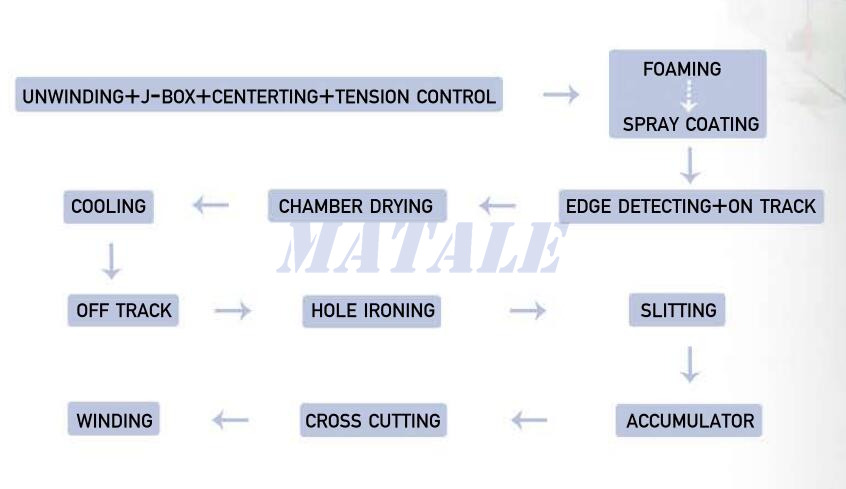
Choosing the correct synthetic grass coating fundamentally changes your machinery requirements. Manufacturers primarily choose between Styrene-Butadiene Rubber (SBR) Latex and Polyurethane (PU). Each material features unique curing mechanisms. They require specialized handling equipment to prevent costly defects.
SBR Latex remains the undisputed industry standard for cost-effective backing. It provides reliable performance for most general landscaping applications. However, operational realities present specific fluid dynamic challenges. SBR Latex contains a high water volume. It tends to pool or spread unevenly. Your machine requires highly accurate doctor blades. These scraping knives must level the latex perfectly. You also need precise lick-roll applicators. They apply the initial fluid layer evenly across the primary backing. These components maintain consistent thickness. They prevent heavy wet spots from forming before the turf enters the drying oven.
Polyurethane offers vastly superior moisture resistance. It provides exceptional durability and a much longer lifespan. High-end sports facilities in extreme climates often specify PU backings. The operational reality of PU is complex. It cures through chemical cross-linking rather than water evaporation. It is highly sensitive to ambient moisture and temperature. The machine application requires a closed-system dispensing unit. You must isolate the unmixed PU components from factory air. Specialized temperature-controlled application heads are mandatory. If the temperature fluctuates, the PU might cure prematurely. It can also foam unexpectedly on the line. Foaming weakens the tuft bind strength significantly.
You must assess your production strategy carefully. Does a dual-capability machine justify the high capital expenditure? A dual machine handles both PU and Latex easily. This flexibility supports a diverse 3-to-5-year product roadmap. Conversely, a single-material dedicated line costs less upfront. It greatly simplifies daily maintenance routines.
Coating Material | Machine Component Needs | Environmental Sensitivity | Best Application Use Case |
|---|---|---|---|
SBR Latex | Doctor blades, lick-roll applicators | Low (water-based evaporation) | Standard landscaping, cost-sensitive projects |
Polyurethane (PU) | Closed-system dispensing, heated heads | High (reacts rapidly to moisture/temp) | High-end sports turf, extreme weather environments |
A coating unit cannot operate in isolation. It must function as a synchronized element of your complete artificial turf line. Precise synchronization between distinct manufacturing stages ensures premium product quality. Poor integration leads to chronic mechanical failures.
The transition from tufting to coating carries significant implementation risks. You often face a severe tension mismatch. The tufting machine outputs heavy fabric at one rate. The coating machine pulls it at another. This mismatch causes fabric skewing. The yarn lines become distorted and crooked. To solve this, manufacturers integrate J-boxes. These accumulators hold a large buffer of tufted fabric. Photoelectric sensors monitor this fabric loop constantly. They absorb speed variations between the two distinct machines safely. Automated edge-guiding systems are also critical. These tentering frames grip the edges of the turf tightly. This ensures flat, uniform feeding into the chemical applicator zone.
After coating, the turf enters the long curing oven. Downstream synchronization presents another major implementation risk. Insufficient curing time leads to wet rolling. The sticky backing adheres to the yarn on the finished roll. Conversely, excessive heat causes severe backing shrinkage. The turf loses its dimensional stability completely. The solution involves advanced multi-zone drying ovens. These ovens utilize variable frequency drive (VFD) blowers. The blowers adjust hot airflow precisely. The coating machine's speed must be dynamically slaved to the oven. Real-time thermal sensors monitor the curing progress. If the oven temperature drops slightly, the entire coating line slows down automatically.
Best Practices for Line Integration:
Calibrate tension load cells weekly to prevent micro-stretching of the primary cloth.
Inspect tentering pins for dullness to avoid catastrophic edge slippage.
Map oven temperatures monthly to ensure all zones heat evenly without cold spots.
Clean photoelectric sensors daily to maintain accurate J-box loop feedback.
When upgrading your facility, evaluating machine specifications requires a rigid, evidence-based framework. Focus heavily on precision mechanics, energy dynamics, and operator software interfaces. These elements dictate your long-term success.
Chemical yield management directly dictates your factory profitability. You must evaluate the micrometer adjustments on the doctor blade. The blade sets the final thickness of the wet backing. A variance of just a few millimeters across a 4-meter width is disastrous. It translates to thousands of dollars in wasted chemical inputs annually. A highly precise, servo-controlled blade reduces this waste. It ensures you meet minimum weight specifications accurately. You avoid over-applying expensive chemical resins to pass quality tests.
Industrial curing ovens consume massive amounts of energy. You must assess the insulation thickness of the curing chambers. Thicker, high-density rock wool insulation retains heat much better. Look for the presence of exhaust heat recovery systems. These systems capture hot air leaving the exhaust stack. They use it to pre-heat incoming fresh air. This dramatically lowers the main burner workloads. Evaluate total gas and electricity consumption per linear meter of turf produced. This specific metric proves essential for calculating true operational efficiency.
Modern factories rely entirely on intuitive software controls. Look for robust recipe management systems within the HMI. Consider a scenario where operators switch products mid-shift. Can they recall the exact speed, tension, and pump rate for a specific SKU with one touch? A well-designed HMI reduces human error during changeovers. It eliminates the need for manual dial adjustments. Operators spend less time calibrating machinery and more time producing premium turf.
Deploying heavy machinery involves complex logistical and regulatory challenges. You must proactively manage environmental rules and factory layouts. Overlooking these factors causes severe project delays.
Both SBR and PU applications generate chemical emissions during curing. Volatile Organic Compounds (VOCs) release into the factory air rapidly. The machine must feature fully enclosed application zones. These physical barriers trap toxic fumes before they escape. The equipment also needs compatible industrial ducting. This ducting connects to external exhaust gas treatment systems. Thermal oxidizers or wet scrubbers neutralize the VOCs effectively. You must ensure the setup meets local EPA or CE regulations. Failing mandatory emissions tests halts your production immediately.
Let us look at a reality check regarding maintenance. Glue applicators and lick-rolls require intensive daily cleaning. Hardened PU ruins expensive applicator heads permanently. You must evaluate the machine's clean-in-place capabilities. Some modern systems flush themselves automatically with specific solvents. Alternatively, assess the ease of removing applicator pans manually. Quick-release mechanical levers allow maintenance crews to swap pans rapidly. They can clean the dirty pan offline. The production line continues running with a fresh pan.
These large machines require significant linear floor space. A full production line often exceeds 50 meters in overall length. You must factor in the strict necessity for cooling zones. The turf exits the curing oven at extremely high temperatures. It must cool down significantly before rolling. Chilled steel rollers absorb this residual heat. These cooling accumulators add substantial length to the overall machine footprint. Measure your factory floor carefully before finalizing any equipment designs.
Base your vendor selection on comprehensive performance metrics rather than just capital cost. Focus heavily on material yield efficiency and energy consumption rates. Evaluate the machine's ability to sync smoothly with your existing tufting hardware. A well-integrated line prevents bottlenecks and reduces chemical waste significantly. For your next steps, request a wet-run trial from the manufacturer. Use your specific primary backing and yarn types during this rigorous test. Demand clear, verifiable data from the engineers. Examine the coating weight consistency across maximum production widths carefully. This empirical evidence guarantees the equipment will meet your strict manufacturing standards.
A: Speeds generally range from 3 to 10 meters per minute. This rate is heavily dependent on the coating material used. Polyurethane requires different handling parameters than Latex. The length and thermal efficiency of your curing oven also dictate the maximum allowable line speed.
A: Yes. Most commercial machines are built for standard 4-meter or 5-meter widths. They include adjustable tentering frames and heavy-duty edge-cutters. These integrated mechanisms allow you to process narrower rolls efficiently without re-threading the entire production line.
A: Tuft bind depends on the precise viscosity of the backing chemical. The machine's PLC system controls this alongside the application roller's downward pressure. The system also monitors proper curing temperatures continuously. Precise control of these three factors ensures the fibers lock securely into the backing.