- All
- Product Name
- Product Keyword
- Product Model
- Product Summary
- Product Description
- Multi Field Search


Views: 0 Author: Site Editor Publish Time: 2026-07-12 Origin: Site


Upgrading carpet and flooring manufacturing lines requires justifying significant capital expenditures. The shift from traditional water-based or latex adhesives to hot melt technology is fundamentally altering production throughput. It completely redefines facility space requirements across the industry. Traditional SBR (styrene-butadiene rubber) latex backing requires massive, linear drying ovens. These legacy setups consistently demand high energy consumption to evaporate moisture. They also dictate stubbornly long curing times, severely limiting daily output. Transitioning to a hot melt coating machine offers measurable reductions in factory energy usage. You can quickly shrink your facility footprint while increasing operational flexibility. Furthermore, it sharply lowers environmental compliance risks, provided you align the equipment optimally to your specific substrate and tension requirements.
Operational Efficiency: Hot melt adhesives cure via cooling, eliminating the need for long, energy-intensive drying ovens.
Facility Optimization: Removing thermal drying equipment reclaims significant factory floor space.
Compliance & Safety: 100% solid hot melt adhesives produce near-zero VOCs, simplifying environmental compliance compared to solvent-based alternatives.
Quality Consistency: Precision slot die and roller applicators ensure uniform coat weights, reducing adhesive waste and preventing substrate warping.
Manufacturers constantly face pressure to maximize output while controlling utility overhead. Comparing legacy latex systems against modern hot melt applications reveals a stark contrast in operational physics.
Water-based and latex backing systems require evaporation. Evaporating water consumes massive amounts of latent heat. This thermodynamic reality dictates your line speed limits. Your production speed depends entirely on the dwell time inside convection ovens. Consequently, this exposes your entire production cycle to fluctuating natural gas and electricity costs. It forces operators into a balancing act. Speeding up the line risks winding wet carpets. Slowing it down destroys shift profitability.
Hot melt adhesives are applied molten and set rapidly upon cooling. This simple thermodynamic difference shifts the production bottleneck entirely away from drying time. The adhesive solidifies as soon as it sheds heat. It enables substantially faster line speeds. You no longer wait for water to boil off. You simply manage cooling rates.
Initial equipment costs for hot melt systems can often appear higher than basic latex applicators. However, ROI is typically achieved rapidly. Manufacturers routinely see reduced natural gas and electricity consumption. Furthermore, advanced applicators decrease adhesive waste significantly. This efficiency drives down the actual cost per square yard manufactured.
Feature | Legacy Latex/SBR Systems | Hot Melt Systems |
|---|---|---|
Curing Mechanism | Evaporation (Heat) | Cooling (Heat loss) |
Line Speed Limit | Low (Oven dwell time dependent) | High (Cooling capacity dependent) |
Space Requirement | Large (Requires 100+ ft ovens) | Compact (Minimal chill rolls needed) |
VOC Emissions | Moderate to High | Near-Zero (100% Solids) |
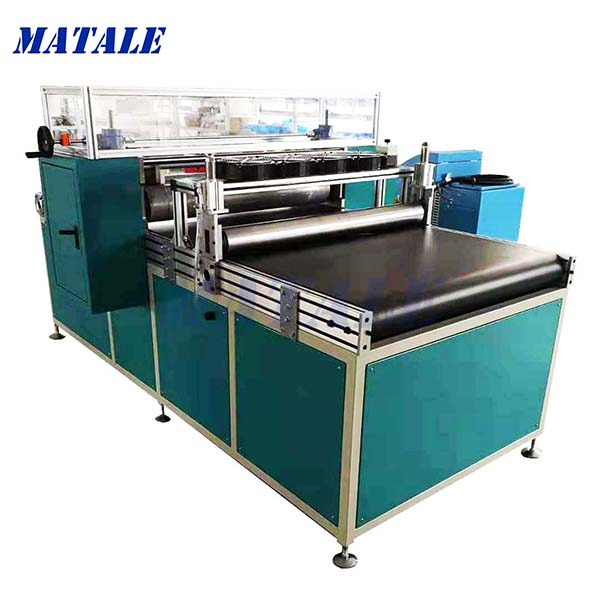
Transitioning away from wet adhesives unlocks several compounding advantages. These benefits directly impact your operational agility and profit margins.
Legacy ovens burn vast amounts of natural gas. They must maintain high temperatures across 100-foot expanses. Conversely, operating electrically heated melt tanks and hoses requires a fraction of this utility load. The system only heats the adhesive immediately before application. This highly targeted energy use has a direct impact on your per-square-yard manufacturing costs.
Cooling and curing happen almost instantly over chill rolls or ambient air. The adhesive locks the carpet tufts securely in seconds. This rapid phase change allows a carpet backing coating line to process much higher volumes per shift. You completely eliminate the risk of wet-roll storage issues. Goods move directly to cutting and shipping.
A complete hot melt coating production line requires significantly less linear floor space than a legacy latex line. You bypass the need for enormous thermal tunnels. This compact footprint enables manufacturers to add secondary production lines. Alternatively, you can utilize the reclaimed factory space for automated warehousing or packaging zones.
Hot melt adhesives contain no solvents. They are 100% solids at room temperature. This composition effectively eliminates VOC emissions during application. It helps manufacturers bypass increasingly stringent air quality permitting requirements. Furthermore, it vastly improves ambient workplace safety for your machine operators.
Best Practice: Always audit your regional emission laws before upgrading. Many jurisdictions offer tax incentives or grants for replacing high-VOC legacy equipment.
Procuring industrial application equipment requires careful technical scrutiny. You must match the machine capabilities directly to your daily production realities.
The method of applying the molten adhesive dictates your product quality. Two primary approaches dominate the carpet industry.
Slot Die Coating: This method is ideal for applying precise, uniform coat weights. It utilizes an enclosed system, actively preventing ambient contamination. It proves best for continuous, high-speed broadloom runs.
Roll Coating: This technique offers superior flexibility. It easily adapts to varying carpet textures and diverse pile heights. Many operators prefer it for specialty or textured runs.
Carpets are highly susceptible to stretch and distortion. Exposing synthetic backings to heat and mechanical pulling causes neck-down. You must demand closed-loop tension control systems. These use sensitive load cells to monitor pull resistance continuously. Proper tension management fundamentally prevents rug deformation during the cooling phase.
Never under-spec your melt tank. The system’s melt rate, usually measured in kilograms per hour, must comfortably exceed your maximum line speed requirements. Falling short causes adhesive starvation. Starvation leads to weak tuft lock and catastrophic delamination.
Uneven heat distribution ruins adhesives. Look for equipment featuring zoned heating controls. The system should monitor temperatures independently across melt tanks, hoses, and application heads. Precise PID controllers prevent adhesive degradation and charring.
Every technology transition introduces new operational challenges. Anticipating these hurdles ensures a smoother ramp-up to full production capacity.
Poorly managed heat zones severely degrade adhesives. Prolonged idle times at operating temperatures burn hot melt polymers. This creates char. Char acts like sand inside your system, causing nozzle clogs and costly downtime. Implement automatic temperature set-back features. These lower the heat during temporary line stops.
Many modern synthetic carpet fibers possess surprisingly low melting points. Polypropylene, for example, reacts poorly to excessive heat. The applicator must precisely control the adhesive temperature upon contact. Overheating will inadvertently melt the primary backing, ruining the roll.
Shifting from wet-glue systems to high-temperature molten systems requires completely updated safety protocols. Workers face thermal burn risks instead of chemical exposure risks. You must institute new maintenance routines. Operators need rigorous training on safe purging procedures and proper inline filter changes.
Common Mistake: Failing to clean slot die lips routinely. Even minor adhesive build-up creates streaks in the coating profile, leading to uneven tuft bind across the carpet width.
Selecting the right equipment manufacturer is critical. You are buying a long-term partnership, not just machinery.
Never purchase based on paper specifications alone. Require the vendor to run your specific carpet substrates. Send them your exact adhesive formulations. They must prove the concept in their own test lab. Observing how your materials behave under tension validates the entire investment.
Ensure your procurement contract includes a rigorous FAT. Do not accept shipment until the machine proves itself. You must personally verify coat weight accuracy. Test the web tension stability under simulated production speeds. Finding flaws at the vendor's facility costs much less than fixing them on your factory floor.
Evaluate how easily the new hot melt system integrates into your existing infrastructure. It must communicate seamlessly with your current unwinds and rewinds. Consider downstream cutting equipment. A well-designed rug coating machine should feature modular electronic handshakes for smooth line synchronization.
Assess the vendor's domestic spare parts inventory thoroughly. Review their Service Level Agreement (SLA). When a hose bursts or a pump fails, waiting weeks for overseas parts destroys your delivery schedules. Strong local support mitigates future operational downtime.
Integrating a hot melt coating machine represents a highly strategic operational upgrade. It trades massive energy waste and sprawling space requirements for precision, speed, and sustainability. You eliminate the historic bottlenecks of evaporative drying. Base your procurement decisions not just on the initial machine price, but on verifiable energy savings. Prioritize vendors demonstrating deep web handling expertise and offering rigorous pre-purchase material testing. Your next action should be auditing your current utility costs per yard of carpet. Consult directly with application engineers to model the projected financial returns of a hot melt transition.
A: Yes, provided the machine is equipped with adjustable application widths. Systems utilizing segmented slot dies easily adjust the coating footprint. You also need variable web tension controls to handle different material weights. These features create a highly versatile rug coating machine suitable for mixed production schedules.
A: Unlike latex which takes several minutes inside a heated oven, hot melt cures in seconds. It solidifies instantly as it passes over mechanical cooling cylinders or simply reaches ambient room temperature. The substrate becomes immediately ready for downstream rewinding or cutting.
A: Modern systems utilize precision gear pumps. These pumps are electronically synchronized directly with the main line speed. They deliver an exact, continuous volume of adhesive. This closed-loop tracking ensures perfectly uniform coat weights, regardless of the line's acceleration or deceleration phases.