- All
- Product Name
- Product Keyword
- Product Model
- Product Summary
- Product Description
- Multi Field Search


Views: 0 Author: Site Editor Publish Time: 2026-06-16 Origin: Site


Investing in industrial textile equipment demands careful consideration. A quality machine transforms your entire manufacturing floor. It directly impacts your production yield, maintenance overhead, and end-product durability. Commercial-grade equipment must withstand continuous, grueling operation. It also needs to maintain strict pile uniformity across massive carpet rolls. Hobbyist tools simply cannot handle these intense industrial demands. When factories scale up, you need reliable mechanics, stable yarn feeding, and precision engineering. This guide provides a clear framework to evaluate equipment specifications. We help you precisely match machine types to your specific manufacturing outputs. You will also learn to navigate vendor selection confidently. Follow these steps to secure the right equipment without falling for superficial marketing claims.
Production volume and design complexity dictate whether you need standard, graphic, or multi-loop configurations.
Equipment evaluation must prioritize mechanical durability (looper quality, servo motors) over advertised top speeds.
Always require vendor sampling with your proprietary yarn blends before committing to a purchase.
To choose the right machinery, you must define clear success criteria. Establish baseline metrics for your entire facility. Track required square meter output per hour. Identify your target market clearly. Commercial broadloom requires very different machinery than bespoke luxury rugs. Determine your acceptable downtime limits beforehand. These metrics form the foundation of your purchasing strategy.
Scale matters immensely in carpet manufacturing. You must clearly separate handheld commercial studio tools from heavy-duty industrial lines. Handheld pneumatic devices serve small custom batches well. Multi-needle carpet manufacturing lines handle massive volume instead. They run continuously across multiple shifts. You cannot bridge the gap between these two operational scales easily. You must commit to the correct class of machinery from day one.
Consider the durability factor carefully. Frame your business problem around high-traffic carpets. These harsh environments make loop pile construction mandatory. Loop pile resists crushing far better than cut pile flooring. Precision tensioning at the machine level dictates final surface quality. Uneven tension causes pulling and surface irregularities. You need a robust loop tufting machine to handle these demands consistently. Tension control ensures every loop maintains identical height across the entire primary backing.
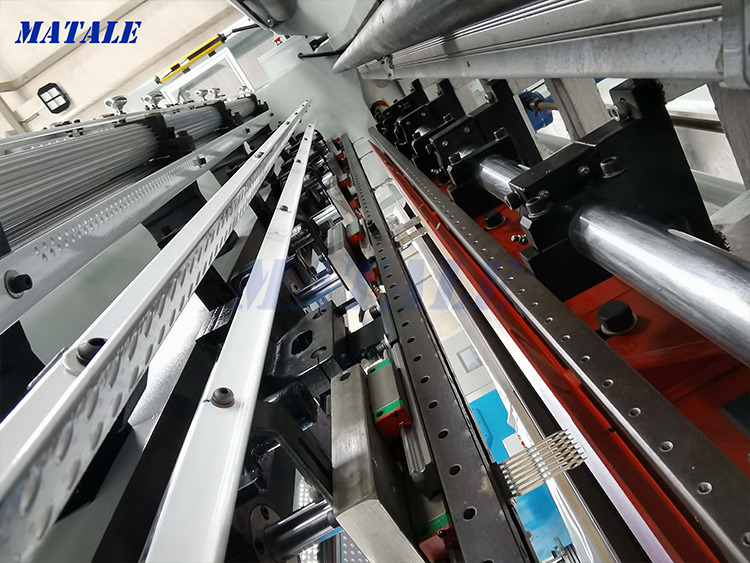
The textile industry divides loop equipment into three distinct categories. You must align your product catalog to the correct category. Attempting to force a machine to perform outside its designed category causes immediate production bottlenecks.
Focus on high-speed, uniform pile height here. A dedicated plain loop tufting system excels at basic, reliable output. They are best for standard commercial flooring and high-traffic hospitality corridors. Solid-color broadloom relies entirely on these workhorse machines. You should emphasize operational stability during evaluation. Output volume remains the primary goal. These units typically feature fewer moving parts, making them highly reliable.
Focus strictly on pattern generation. These machines use individually controlled yarn feeds. Some models use shifting needle bars instead. A graphic loop tufting setup creates custom hospitality carpets and branded designs beautifully. You need robust CAD-to-machine software integration for this category. Operators send digital patterns directly to the needle bed. The software translates pixels into mechanical needle shifts instantaneously.
Focus on creating varied textures in a single pass. A multi loop tufting machine uses sophisticated servo-driven yarn feed rollers. It creates intricate high-low loop patterns seamlessly. These systems are best for premium architectural carpets and high-end residential flooring. They present complex maintenance challenges due to the dense mechanical arrays. You will definitely need highly skilled operators to run them successfully.
Machine Category | Primary Focus | Best Suited For | Operator Skill Level Needed |
|---|---|---|---|
Plain Loop | Speed and uniform pile height | Solid-color broadloom, corridors | Basic to Intermediate |
Graphic Loop | Pattern generation via CAD | Branded designs, custom hospitality | Advanced (Software training) |
Multi Loop | High-low varied textures | Premium architectural, high-end residential | Expert (Mechanical & Software) |
Evaluating specification sheets requires deep mechanical understanding. Do not look solely at maximum speed ratings. You must analyze the core components driving the needle bar. These technical specifications dictate your long-term manufacturing capabilities.
Gauge and Stitch Density: You must select the right needle spacing carefully. Gauge represents the fraction of an inch between needles. Common fractions include 1/10, 1/8, and 5/32 gauge setups. Choose a tighter 1/10 gauge for dense, low-profile commercial carpets. Select a wider 5/32 gauge for bulkier residential loop yarns. Face weight requirements directly dictate this selection.
Pile Height Flexibility: Evaluate machines based on their adjustable range. Assess how easily operators can switch heights. Warn your purchasing team against machines demanding extensive mechanical recalibration for minor changes. Modern systems should allow rapid adjustments via accessible stroke settings.
Drive Systems and Components: Compare standard induction motors against modern servo-driven systems. Servo motors provide superior acceleration and precise stopping control. Emphasize the importance of tungsten steel loopers. These hardened components resist wear significantly better than standard alloys. High-carbon needle bars minimize flexing during high-speed operation.
Yarn Tensioning Mechanisms: Precise, automated tension control is non-negotiable. Uneven tension creates inconsistent loops and frequent yarn blowouts. Advanced tensioners monitor yarn feed rates constantly. They adjust feed rollers micro-seconds before a blowout occurs.
Best Practice: Always request a component metallurgy report from the vendor. Confirm they use genuine tungsten steel for all high-friction looper hooks.
Common Mistake: Buying a machine solely for its maximum RPM. Running a machine at maximum RPM constantly accelerates part degradation rapidly.
Purchasing the equipment represents only the first step. Installing and operating it brings complex realities to your facility floor. You must plan for these operational risks proactively.
Advanced equipment requires serious digital competency. Graphic and multi-loop machines require operators trained in specialized patterning software. You must factor in the learning curve and mandatory training periods. Do not assume your current mechanical operators can transition to CAD-driven systems overnight. They will need structured classroom time. Factory managers often underestimate this transitional friction.
Assess your facility readiness immediately. Industrial multi-needle beds draw immense electrical loads. Verify you have specific power phases available (typically 3-phase, 380V or 480V). Check your compressed air stability carefully. Many tensioning systems rely on pneumatic actuators. Pressure drops in your air lines will cause immediate stitching errors. Furthermore, environmental dust extraction is critical. Carpet manufacturing generates massive amounts of airborne lint. You need dedicated industrial HVAC systems directly above the machinery.
Acknowledge the reality of strict preventive maintenance schedules. Highlight to your stakeholders that "zero-maintenance" claims are entirely false in textile machinery. Every machine requires daily lubrication and weekly part inspections. Focus instead on the accessibility of wear parts. Can your technicians reach the looper bed easily? Do they need special proprietary tools to swap a broken needle? Machines designed for easy access reduce downtime drastically.
Choosing a manufacturing partner requires intense scrutiny. You are entering a decade-long relationship. You rely on them for crucial technical support and replacement parts.
Never buy based on specification sheets alone. Require vendors to run physical test tufts. Send them your exact yarn denier and preferred backing material. Examine the finished sample under magnification. Look for uniform loop structures. Check for backing puncture damage. If the vendor refuses to run a custom sample, eliminate them from your shortlist immediately.
Assess the vendor's Service Level Agreement (SLA) for replacement parts. You will consume needles, loopers, and sensors regularly. A cheaper initial machine cost means nothing if parts delay production. Ask where they warehouse their spare parts. A six-week international freight delay for a simple sensor will ruin your production schedule. Demand guaranteed delivery windows for critical consumables.
Verify all required safety and manufacturing certifications. Look for CE or ISO marks where relevant to your region. Scrutinize the warranty fine print carefully. Many vendors hide behind broad "wear and tear" exclusions. Ensure major structural components, like the main drive shaft and servo motors, carry multi-year guarantees. Understand exactly what voids the warranty before signing.
Evaluation Criteria | Target Standard | Red Flags to Avoid |
|---|---|---|
Sample Testing | Flawless run using your proprietary yarn | Refusal to test; only showing stock samples |
Part Availability | Domestic warehouse; 48-hour SLA | International shipping only; no SLA provided |
Warranty Terms | 3+ years on motors; clear component list | Vague "wear and tear" clauses |
Software Support | Direct integration; free training included | Third-party software required; paid updates |
The right loop tufting machine balances your immediate budget constraints alongside long-term production scalability. Choosing wisely transforms a chaotic factory floor into a streamlined, high-yield operation. By matching your specific broadloom or custom carpet goals to the correct machine category, you eliminate unnecessary friction.
Prioritize component durability and strong vendor support over superficial digital features. A rugged looper bed running reliably outpaces a fragile machine boasting higher top speeds. Take action now by building a customized Request for Proposal (RFP) matrix. Base this matrix strictly on the gauge, speed, and software integration requirements detailed in this guide. Force vendors to prove their capabilities through rigorous physical sampling.
A: Dedicated industrial machines are rarely convertible between loop and cut pile due to fundamental differences in looper hook geometry and timing mechanisms. Commercial 2-in-1 prosumer guns allow looper and scissor swapping, but these smaller tools severely compromise on operational speed and durability. For factory environments, you need dedicated machines for each style.
A: The standard industry range typically spans from 3mm to 12mm. Operating below 3mm risks primary backing damage and frequent needle strikes. Pushing beyond 12mm often causes yarn instability and irregular looping. Extreme pile heights require specialized feeding attachments to manage the increased yarn drag effectively.
A: Highly abrasive yarns, like poor-quality wool or unrefined coarse synthetics, accelerate looper wear drastically. The continuous friction acts like sandpaper against the needle eyes and looper hooks. This necessitates buying machines featuring hardened tungsten steel components to withstand the abrasion and maintain strict pile uniformity over time.